How we work.
Abliteration: how we take the “I can't help with that” out of a language model, without taking anything else out with it.
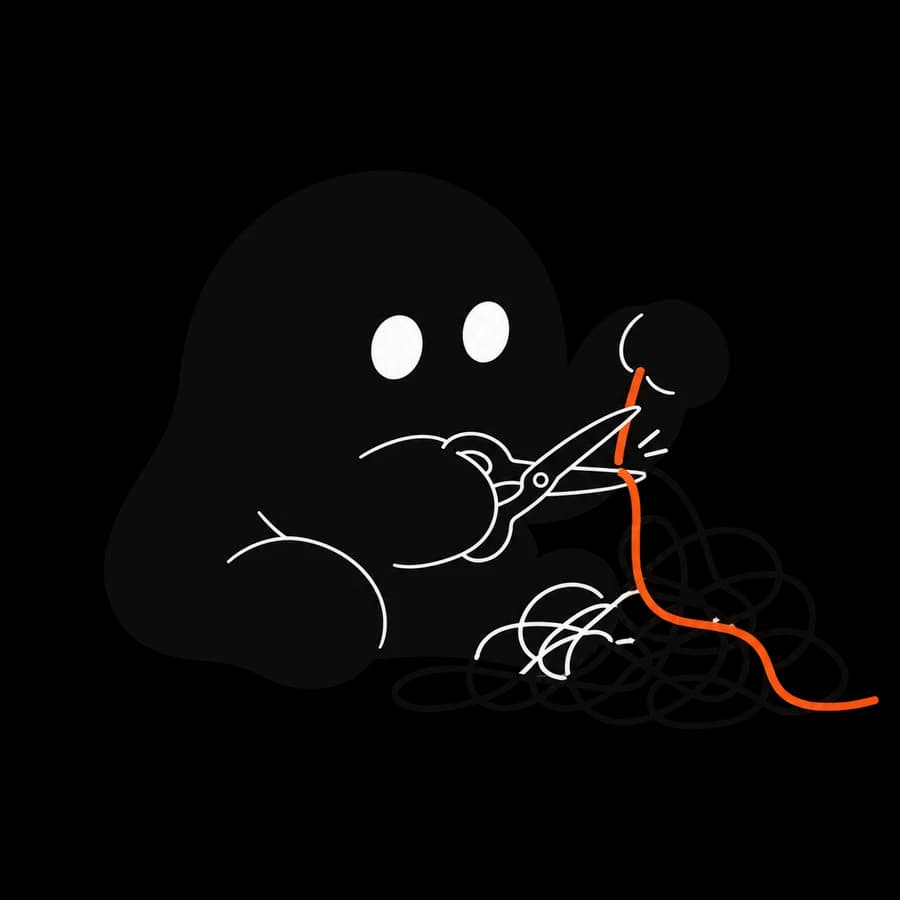
Refusal is one direction.
A language model turns your message into long lists of numbers, called activations, and passes them through dozens of layers. In 2024, researchers found something surprisingly simple inside chat models: when a model is about to refuse, its activations all shift the same way.
Across many different refused requests, it's essentially one direction: the refusal direction.
Figure 1. Two kinds of prompts, one direction between them
Figure 2. Where the refusal signal lives
The direction shows up most clearly in the middle of the network, where the model has understood the request but hasn't written anything yet.
That's where it “decides” to refuse, and that's where abliteration aims.
How it works.
Abliteration (ablate + obliterate) uses that finding directly. Find the direction once, then edit the model so it can never move along it again. No retraining and no tricks in the prompt: the change lives in the weights.
- 1
Collect two sets of prompts
Hundreds of requests the model normally refuses, and hundreds of ordinary ones it happily answers.
- 2
Record what the model thinks
Run both sets through the model and save its internal activations at every layer.
- 3
Find the direction
Average each set and subtract one from the other. The difference points the way the model moves when it's about to refuse.
- 4
Remove it from the weights
Adjust the weights so they can no longer write along that direction. The model keeps everything else it knows.
Figure 3. Removing one direction, keeping the rest

Why it barely touches anything else
A 27B model works in thousands of dimensions at once. Removing one of them is a tiny edit, aimed at exactly the behaviour we want gone. Knowledge, writing style and reasoning live elsewhere.
What changes, what doesn't.

Before
I'm not comfortable writing a roast that could hurt someone's feelings. How about a kind birthday message instead?

After
Dave's so late to everything, his birth certificate says “expected: Tuesday-ish”. Want five more?
Example prompt: “Write a brutal roast of my friend Dave, who's always late.”
It isn't magic. Abliteration removes most refusals, not every single one, and the edit can cost a little general ability, which is why careful versions test the model afterwards and sometimes give it a light fine-tune to recover. It also can't add knowledge the base model never had.
Further reading.
Ask it something.
Helios 1 is abliterated. Zouk is fine-tuned to answer first, too.